
What Really Powers Modern Advertising Platforms
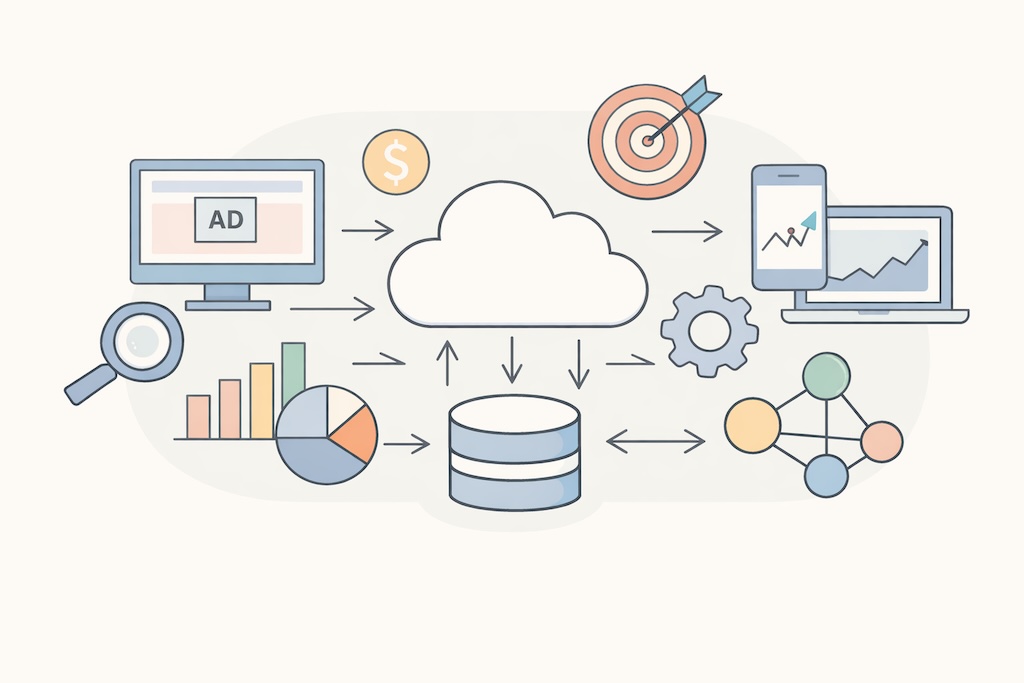
Advertising technology often looks simple from the outside.
Campaigns run. Ads appear. Numbers update in dashboards.
But the systems behind all of this are anything but simple.
That complexity usually becomes visible only when scale enters the picture—and that’s where ad tech software development services start to matter.
Where Things Begin to Change
At a smaller scale, advertising tools feel manageable.
A few campaigns, basic targeting, standard reporting. Teams rely on existing platforms and everything seems to work as expected.
Then growth happens.
More channels, more audiences, more data. Campaigns start running across multiple platforms simultaneously. Performance needs to be tracked in near real time.
And the same tools that worked before begin to feel limited.
Not broken—just not enough.
What These Systems Actually Need to Do
One of the interesting things about ad tech is that it’s not just about showing ads.
It’s about handling continuous flows of data.
Clicks, impressions, conversions—these events never stop. Systems need to collect, process, and respond to them quickly enough to influence outcomes.
A strong ad tech software development services approach focuses less on individual features and more on how data moves through the system.
Because once data flow breaks, everything else follows.
The Part Most Teams Underestimate
If you ask engineers working in ad tech where the real complexity is, many will give the same answer.
Integration.
Advertising platforms rarely operate alone. They connect to exchanges, analytics tools, tracking systems, and internal dashboards.
Each connection introduces a dependency.
Sometimes everything works smoothly. Other times, small issues cascade across the system—delayed data, inaccurate reporting, missed optimization opportunities.
This is where system design starts to matter more than individual features.
Real-Time Isn’t Just a Feature
In many software products, processing data with some delay is acceptable.
Ad tech is different.
Decisions often need to happen immediately.
Bidding, targeting, optimization—these actions rely on fresh data. Even small delays can affect performance.
That requirement changes how systems are built.
Infrastructure needs to support fast processing, low latency, and consistent availability.
Why Off-the-Shelf Tools Fall Short
There are plenty of advertising platforms available.
And for many use cases, they’re enough.
But as operations grow, companies often need more control—over data, over logic, over integrations.
At that point, extending existing tools becomes harder than building something tailored.
That’s when custom development starts to make sense.
Reliability Becomes a Business Factor
Ad tech systems don’t have much room for failure.
If data pipelines slow down, optimization suffers. If systems go offline, campaigns stop.
This means reliability is not just technical—it directly affects revenue.
Systems need monitoring, redundancy, and the ability to recover quickly from issues.
Privacy Changes the Landscape
Another layer of complexity comes from privacy.
Regulations evolve. Tracking capabilities change. Data usage becomes more restricted.
Ad tech systems need to adapt.
Balancing performance with compliance is not always straightforward, but it’s necessary.
These Systems Don’t Stay Still
Ad tech platforms evolve constantly.
New channels appear. Algorithms change. Data patterns shift.
Systems need to adjust.
Teams that treat them as fixed products usually struggle later.
Choosing the Right Approach
Not every company needs a fully custom platform.
Sometimes improvements in data flow or integrations are enough.
Other times, a more significant redesign is required.
It depends on how complex the system has become.
Final Thought
Advertising technology might look invisible.
But behind every campaign is a system processing data, making decisions, and adapting in real time.
Ad tech software development services help build those systems so they remain stable as complexity grows.
Because in advertising, timing matters.
And the systems behind that timing matter even more.