
The Sonic Launch: How Startups Are Leveraging AI Audio Infrastructure to Stand Out
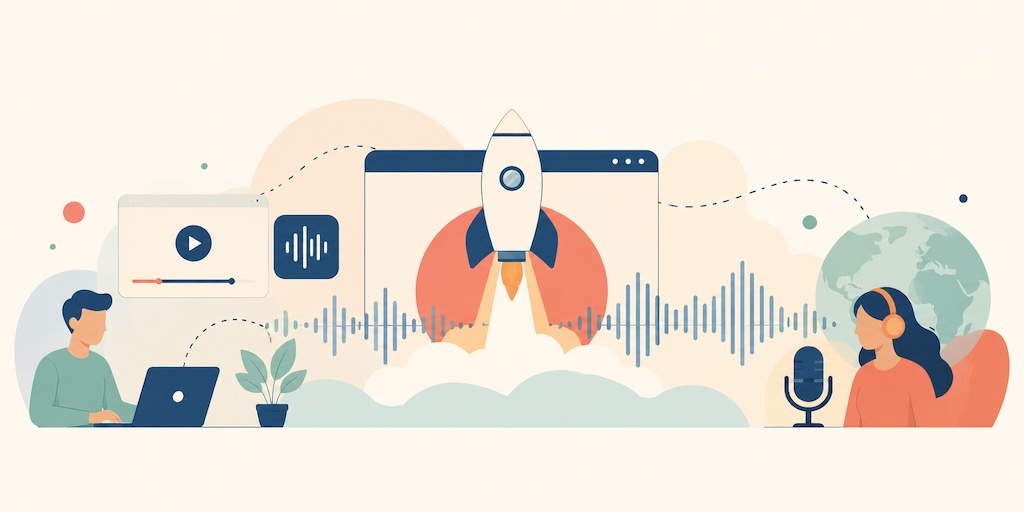
In the highly competitive startup ecosystem of 2026, the mechanics of a successful product launch have undergone a profound evolution. Platforms like Pitchwall have become the ultimate testing grounds where early-stage companies must capture user validation, market traction, and investor attention within a matter of seconds. For years, the standard playbook for a digital launch relied almost entirely on the visual plane—clean landings, high-fidelity app mockups, and sleek UI animations. However, as digital directories and social feeds become flooded with visually pristine products, founders face a shifting paradigm: visual saturation has led to an attention deficit.
To break through this noise, modern startups are expanding their user experience and marketing playbooks beyond what users see. The auditory layer of a product launch—the backing track of a promotional video, the narration of an explainer demo, or the ambient soundscape of a mobile application—is no longer an afterthought. It has become a core strategic component. A launch that sounds generic or relies on overused stock music immediately signals a lack of brand maturity. Conversely, a distinct, tailored audio identity can dramatically elevate perceived product value, increase video completion rates, and drive conversions.
Historically, implementing a high-quality sonic strategy was financially and logistically impossible for lean startups. Sourcing royalty-free music that actually fit a brand's unique energy, renting recording equipment, hiring voice talent, and localizing video assets for global markets required weeks of coordination and thousands of dollars in overhead. For a bootstrapping team, these friction points meant settling for sub-optimal, generic audio.
Today, generative intelligence has effectively dissolved these traditional barriers. Cloud-based platforms like Tad AI have introduced full-stack audio infrastructure directly into the creator's browser. By automating both musical composition and natural vocal synthesis, this unified ecosystem allows tech entrepreneurs and marketing teams to produce studio-grade audio assets programmatically, transforming how startups pitch their vision to the world.
1. The Multi-Model Advantage: Studio-Quality Sound for Resource-Lean Teams
When a startup presents its product to early adopters or venture capitalists, the quality of its media assets directly reflects the quality of its engineering. Low-fidelity audio artifacts, robotic vocal modulations, or poorly mixed background tracks can subvert even the most revolutionary software concept. For founders launching on high-visibility platforms, professional sound is a mandatory requirement.
The platform achieves this enterprise-grade quality by abandoning the single-algorithm approach that limited early generative audio tools. Instead, it leverages a sophisticated multi-model architecture that orchestrates industry-leading engines simultaneously, including Suno and Mureka. Rather than forcing creators to choose between different platform strengths, the system splits generation parameters across these neural networks to compile a polished, master-grade final asset.
Suno brings massive training depth to the pipeline, excelling at capturing sweeping melodic progressions, genre-specific arrangements, and emotionally resonant instrumental variables. Mureka operates as a complementary layer, heavily optimized for pristine frequency balancing, rhythmic precision, and automated studio mastering.
When a startup inputs a creative prompt into the interface, this parallel synthesis pipeline ensures that the low-end frequencies of the rhythm hit with clean dynamics, while the mid-ranges and high frequencies remain crisp and uncompressed. The resulting audio file sounds as if it emerged from a dedicated commercial recording studio, giving resource-lean startup teams the ability to compete on production value with heavily funded enterprise corporations.
2. Global Scale on Day One: The Text-to-Speech Localization Pipeline
Modern software is inherently global, and the most successful startups design their launch strategies for international reach from day one. However, while translating a landing page's text strings is a straightforward engineering task, localizing video pitches, product walkthroughs, and customer onboarding tutorials has historically been an operational bottleneck. Managing regional casting calls, hiring native voice actors, and synchronizing multiple audio tracks across localized video edits can delay a product launch by months.
The deployment of the Tad AI Text to Speech engine provides startups with a scalable localization infrastructure that eliminates this friction entirely. Driven by advanced neural speech synthesis networks, and the rapid expansion of the global voice AI market the system parses written scripts and converts them into natural, highly expressive human vocals across more than 50 languages and regional dialects.
This voice architecture relies on complex prosody modeling—the mathematical replication of human intonation, stress patterns, speech rhythm, and contextual pauses. The generated output avoids the monochromatic, robotic delivery of legacy reading tools, offering voices that breathe, emphasize key technical terms naturally, and adjust their emotional delivery based on the sentence structure.
Founders can exercise granular control over their vocal casting, choosing between distinct male and female vocal architectures or introducing specific vocal references to guide the timbre and delivery style. This allows an independent software team to convert a single English launch script into native-sounding, high-retention audio narratives for audiences in Tokyo, Paris, Berlin, or São Paulo instantly. By automating the voiceover pipeline, startups can dramatically accelerate their time-to-market while ensuring their product speaks to a global target demographic in their native tongue.
3. Designing a Unique Brand Anthem: Breaking the 60-Second Loop
A major limitation of early machine learning audio tools was their short context memory window. Most models could only maintain musical logic for roughly 30 to 60 seconds before suffering from semantic drift, causing the tempo to break down, the key to shift randomly, or the instruments to clash. For founders creating long-form content—such as a comprehensive product keynote, a live-streamed launch demonstration, or an extended pitch presentation—this required looping short clips indefinitely, resulting in a tedious, repetitive background environment.
The platform shatters this temporal constraint by supporting continuous, structurally sound generations of up to 8 minutes. Because the underlying transformer models feature expanded context retention windows, the engine remembers the foundational musical theme established in the first few measures of the track, allowing for a genuine narrative arc. An 8-minute generation can naturally build intensity during an introductory phase, transition into a structured bridge during a deep-dive product feature breakdown, and resolve smoothly during the final call to action.
Furthermore, with access to over 375 distinct musical styles, startup teams can move away from generic corporate audio templates. Marketers can programmatically fuse disparate genres—such as blending clean, minimalist ambient electronics with warm, organic acoustic instruments—to construct an entirely original sonic identity that aligns seamlessly with their visual brand guidelines.
4. Algorithmic Versatility: Smart vs. Custom Mode Workflows
In a fast-paced launch environment, agility is everything. Startups need tools that can support rapid prototyping during early brainstorming sessions while still offering deep customization when it is time to finalize public-facing creative assets. The platform balances these conflicting needs through a flexible dual-mode interface.
The Smart Mode
Built for speed and high-volume asset testing. In this mode, users leverage natural language descriptions or visual image inputs to guide the AI. The system abstracts all complex musical variables—such as chord progressions, instrumentation choices, mixing balances, and tempo maps—and delivers two distinct, studio-grade audio options in seconds. This allows a marketing team to run extensive A/B tests on social media ad variants, generating multiple distinct backing tracks to see which auditory profile drives the highest click-through rates.
The Custom Mode
Engineered for ultimate precision and technical control. In Custom Mode, founders and multimedia producers can input up to 3,000 characters of custom text and explicitly dictate genre variables.
The most powerful technical asset within this mode is the Vocal and Instrumental Reference Input. Users can upload a short audio clip or style seed, which the AI analyzes to map out its acoustic footprint, rhythm, and frequency response. The system then uses this mathematical blueprint to generate a completely original, custom-tailored track that shares the exact aesthetic energy of the reference, removing the guesswork from automated sound design.
5. Commercial Protection: Navigating the Intellectual Property Landscape
For any startup seeking venture capital funding or scaling its user base, intellectual property compliance is a critical consideration. Modern content distribution networks utilize hyper-aggressive automated scanners that can instantly flag, mute, or demonetize digital media due to unclear music licensing, un-cleared loops, or sample plagiarism, making properly licensed and copyright-safe music increasingly important for startup marketing teams.Facing a DMCA takedown or a copyright strike during a high-stakes product launch can severely derail a company's marketing momentum.
The integration of a legally transparent, royalty-free model represents a major operational advantage for founders. Every track synthesized through the platform is created from unique mathematical weights rather than slicing up existing copyrighted samples.
This means that the output files are completely clean digital assets, granting teams full commercial utilization rights. Startups can confidently upload their promotional videos to YouTube, run paid ad campaigns on Meta and TikTok, and embed custom tracks directly into their software applications without worrying about hidden licensing fees, legal disputes, or retrospective copyright litigation.
6. Curing Founder's Block with Semantic Deep Reasoning Models
The challenge of creating a compelling launch video is often conceptual rather than technical. Startup teams are experts at building software, but they frequently experience writer's block when tasked with writing a poetic script, compelling lyrics for a brand anthem, or highly descriptive prompts that translate their product's technical utility into an emotional audio narrative.
To eliminate this creative bottleneck, the platform incorporates advanced deep reasoning models explicitly trained on semantic thematic mapping and lyrical structure. When a team inputs an abstract concept or a list of core product features into the creation module, this specialized linguistic layer analyzes the intent, metaphors, and cultural touchpoints of the text.
The deep reasoning model then generates cohesive, structured verses, hooks, and choruses that match the chosen song's overarching mood and metric rhythm perfectly. This eliminates the disconnect between written messaging and auditory style, ensuring that the lyrical content sounds authentic, structured, and perfectly syncopated with the final musical master.
7. Conclusion: Formulating an Auditory Moat
As the visual web reaches its saturation point, the startups that stand out on launch directories and crowdfunding platforms will be those that treat sound as a core element of their competitive advantage. High-fidelity audio is no longer a luxury reserved for legacy brands with massive creative budgets; it is an accessible infrastructure that can be leveraged by any agile team with a browser.
By combining the multi-model synthesis power of Suno and Mureka with advanced conversational tools like the Tad AI Text to Speech engine, granular reference controls, and a legally secure royalty-free model, the platform has fundamentally democratized professional audio design. It allows founders to stop searching for the perfect stock asset and start generating their own iconic sonic identities. The barrier to studio-grade sound has officially dissolved, leaving the global digital stage wide open for startups ready to turn their vision into sound.