
How B2B Companies Are Using Data to Train Smarter AI Models
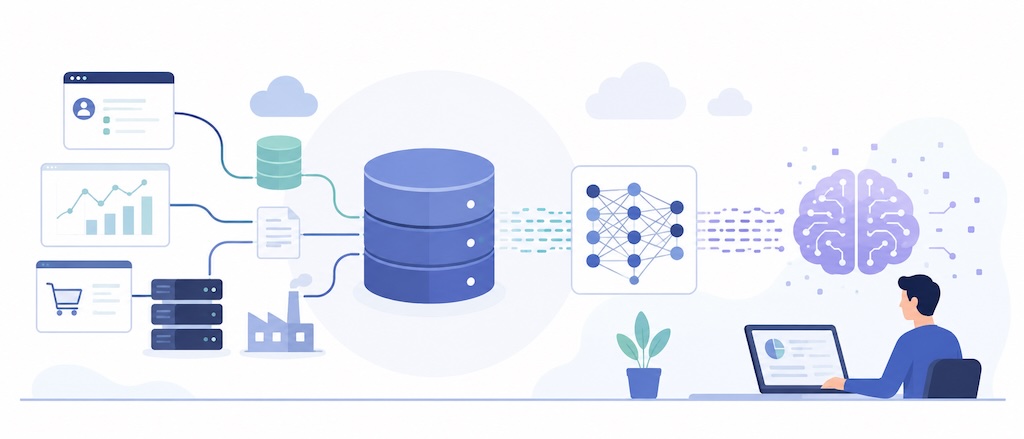
Artificial intelligence is rapidly transforming the way businesses operate. What was once considered an experimental technology has become a core component of modern enterprise strategy. Today, organizations are using AI to improve customer experiences, automate repetitive processes, strengthen cybersecurity, optimize supply chains, and make faster, more informed decisions.
However, the success of any AI initiative depends on one critical factor: data.
While advanced AI models continue to attract attention, many business leaders are discovering that the real competitive advantage comes from the quality of the data used to train and improve those models. In the B2B world, where organizations generate vast amounts of operational, financial, customer, and industry-specific information, data has become one of the most valuable strategic assets.
This article explores how B2B businesses are using Data for AI to train smarter AI models, why data quality matters more than quantity, and the strategies organizations are adopting to transform business information into a sustainable competitive advantage.
Why Data Matters in B2B AI
AI systems learn patterns from data. The more relevant, accurate, and contextual the data, the more effective the resulting AI model becomes.
Unlike consumer-focused AI applications that often rely on large volumes of publicly available information, B2B organizations typically work with proprietary datasets generated through their own operations. These datasets contain unique insights about customers, processes, transactions, products, and industry-specific challenges.
For example, a SaaS company may train AI systems using customer support interactions, product usage logs, and CRM data to predict churn and improve retention. A logistics company might use shipment histories, route performance metrics, fuel consumption data, and weather patterns to optimize delivery operations.
Because these use cases are highly specialized, the quality and relevance of the training data often matter far more than the overall volume.
The Shift from Big Data to Smart Data
For years, organizations believed that larger datasets automatically produced better AI outcomes. While access to substantial amounts of information remains valuable, many businesses are now focusing on what industry experts call "smart data."
Smart data refers to information that is clean, structured, relevant, contextualized, and aligned with a specific business objective.
Poor-quality data can introduce bias, reduce prediction accuracy, and create unreliable automation. Duplicate records, inconsistent formats, missing values, and outdated information often weaken AI performance regardless of model sophistication.
This shift has encouraged organizations to invest more heavily in data quality initiatives rather than simply collecting additional information.
According to research published by the MIT Sloan Management Review, successful AI adoption increasingly depends on strong data foundations and organizational readiness rather than technology alone. Similarly, the National Institute of Standards and Technology (NIST) AI Risk Management Framework highlights the importance of trustworthy, high-quality data for reliable AI systems.
For B2B organizations, smarter data often leads to smarter outcomes.
Common Data Sources Used for AI Training
Customer Relationship Management (CRM) Data
CRM platforms contain valuable information about customer interactions, sales activities, support history, buying behavior, and account engagement.
Organizations use AI trained on CRM data to:
- Predict customer churn
- Improve sales forecasting
- Identify upselling opportunities
- Personalize customer engagement
- Prioritize high-value leads
By learning from historical customer behavior, AI systems can help revenue teams make more informed decisions.
Operational and Process Data
Operational systems generate large amounts of information about how a business functions on a daily basis.
Examples include:
- Inventory levels
- Production metrics
- Software application logs
- Procurement records
- Workflow data
- Resource utilization metrics
AI models trained on operational data can identify inefficiencies, forecast demand, automate workflows, and improve resource allocation.
Customer Support Data
Support tickets, chat conversations, emails, and help desk interactions provide rich datasets for Natural Language Processing (NLP) models.
Businesses use these datasets to:
- Automate support responses
- Analyze customer sentiment
- Detect recurring issues
- Recommend solutions to support teams
- Improve response times
As support volumes increase, AI enables organizations to maintain service quality while reducing operational costs.
IoT and Sensor Data
Manufacturing, logistics, energy, and industrial organizations increasingly rely on Internet of Things (IoT) devices that continuously generate operational data.
These systems monitor:
- Equipment health
- Temperature conditions
- Pressure levels
- Machine performance
- Energy consumption
AI models trained on sensor data can predict equipment failures, reduce downtime, and improve operational efficiency through predictive maintenance.
External Market and Industry Data
Many organizations enhance internal datasets with external information sources, including:
- Economic indicators
- Industry benchmarks
- Market trends
- Regulatory updates
- Competitive intelligence
Combining internal and external data helps AI systems develop a more complete understanding of business environments and market conditions.
Data Preparation: The Most Important Step Nobody Talks About
One of the biggest misconceptions about AI is that success begins with selecting the right model.
In reality, much of the work happens before model training ever starts.
Data preparation typically involves:
- Removing duplicate records
- Correcting inconsistencies
- Standardizing formats
- Filling missing values
- Labeling datasets
- Eliminating irrelevant information
Many organizations discover that data preparation consumes a significant portion of their AI project timelines.
The reason is simple: AI models can only learn from the information they receive. If the underlying data is inaccurate, incomplete, or poorly structured, even the most advanced AI system will struggle to deliver meaningful results.
Clean, well-governed data improves model accuracy, reduces bias, and increases trust in AI-generated insights.
Industry-Specific AI Is Becoming the Future
One of the most important trends in enterprise AI is the rise of industry-specific models.
Rather than relying solely on generic AI systems, organizations are increasingly training models using data tailored to their industry and business requirements.
Examples include:
Healthcare Suppliers
Healthcare organizations use inventory data, procurement histories, compliance information, and demand forecasts to optimize supply chain operations.
Financial Technology Companies
Fintech providers train AI models using transaction histories, fraud indicators, and risk profiles to improve fraud detection and risk assessment.
Manufacturing Businesses
Manufacturers use machine telemetry, maintenance records, and production data to predict equipment failures and improve productivity.
SaaS Companies
Software providers analyze product usage behavior, support interactions, and customer engagement metrics to improve retention and customer success outcomes.
Domain-specific AI models often outperform generalized solutions because they better understand industry terminology, workflows, and decision-making processes.
Data Governance and Security Cannot Be Ignored
As AI adoption grows, data governance becomes increasingly important.
B2B organizations frequently handle sensitive information, including financial records, customer databases, proprietary business intelligence, contracts, and operational data.
Strong governance practices help organizations:
- Protect sensitive information
- Maintain regulatory compliance
- Improve transparency
- Reduce bias in AI systems
- Strengthen stakeholder trust
Leading companies are implementing encryption, access controls, anonymization techniques, monitoring systems, and governance frameworks to ensure AI is developed responsibly.
Trustworthy AI begins with trustworthy data.
Common Challenges Organizations Face
Despite the benefits of AI, many B2B companies encounter obstacles during implementation.
Some of the most common challenges include:
Data Silos
Critical information often remains scattered across disconnected systems, limiting visibility and reducing AI effectiveness.
Poor Data Quality
Incomplete, outdated, or inconsistent records can significantly reduce model performance.
Privacy and Compliance Requirements
Organizations must comply with industry regulations governing how data is collected, stored, and used.
Integration Complexity
Connecting multiple platforms and data sources often requires substantial technical effort.
Talent Shortages
Many organizations still lack experienced data engineers, AI specialists, and data governance professionals.
Companies that successfully overcome these challenges are often rewarded with stronger operational intelligence and long-term competitive advantages.
The Future of B2B AI
The next phase of enterprise AI will not be defined by who has access to the most powerful models. Increasingly, the competitive advantage will belong to organizations that possess the most relevant, accurate, and well-governed data.
As AI technologies become more accessible, proprietary business data is emerging as the true differentiator.
Organizations are investing heavily in modern data infrastructure, governance frameworks, cloud platforms, and specialized AI solutions designed around their unique business needs.
Those that can effectively collect, organize, enrich, and operationalize their data will be better positioned to improve forecasting, automate complex workflows, strengthen customer relationships, and uncover new growth opportunities.
In the end, smarter AI starts with smarter data. For B2B organizations, long-term success will come not from feeding models endless amounts of information, but from providing high-quality, relevant, and business-specific data that enables AI to solve real-world challenges and deliver measurable results.