
How AI Translation Infrastructure Is Powering Global Tech Expansion
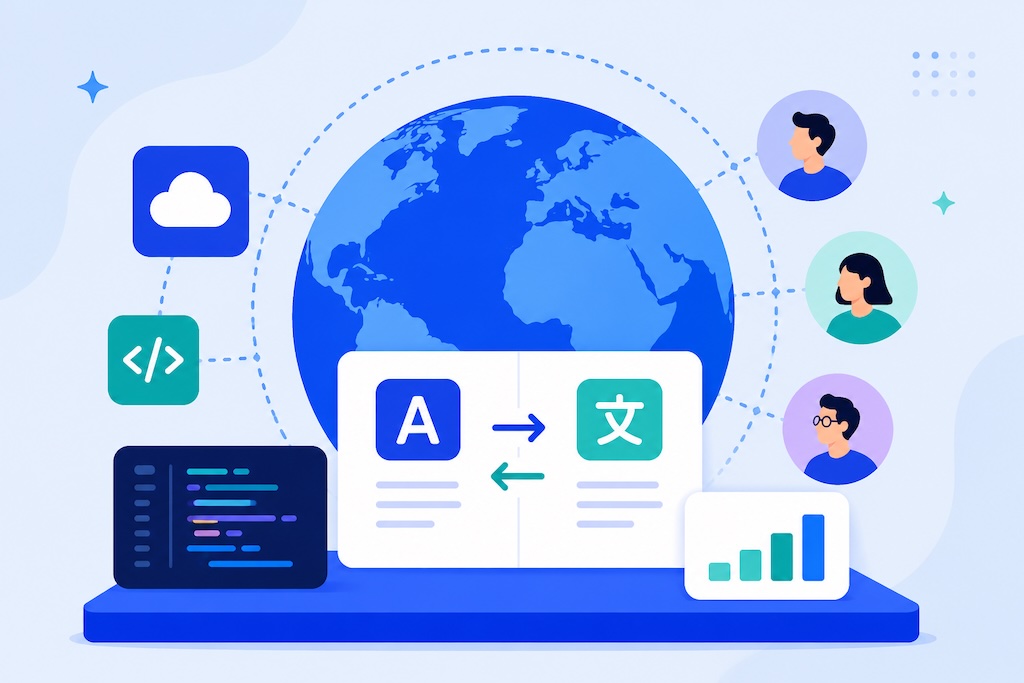
The modern tech industry has solved many of the barriers that once limited global expansion. Cloud infrastructure scales instantly, remote teams collaborate across continents, and SaaS products can launch internationally within days. Yet one major bottleneck still slows global growth for many technology companies: language infrastructure.
For tech businesses operating across multiple regions, translation is no longer a support function handled at the end of a launch cycle. It has become a core operational layer that impacts product adoption, compliance, customer experience, and international revenue growth.
Whether it’s a SaaS startup entering Europe, an AI company onboarding enterprise customers in Asia, or a cybersecurity platform handling multilingual documentation, the ability to communicate accurately across markets directly affects scalability.
As global software adoption accelerates in 2026, translation has evolved from simple localization into a strategic technology enablement system.
Why Generic Translation Fails in Technology Environments
Technology companies operate in highly specialized environments where precision matters. Translating a software dashboard, API documentation, compliance policy, or cloud infrastructure guide requires much more than linguistic fluency.
A mistranslated technical instruction can break workflows. Poor localization in onboarding flows increases churn. Incorrect terminology in cybersecurity or fintech documentation can create regulatory exposure.
This is why companies increasingly rely on specialized providers like Rapid Translate that focus on industry-specific translation workflows instead of generalized language processing. Their approach emphasizes translators with domain expertise in legal, technical, medical, financial, and software-related content rather than assigning projects through generic translation pipelines.
For modern tech organizations, domain context is often more important than direct word replacement.
Technical Accuracy Has Become a Product Requirement
The software industry now ships products globally by default. Even small startups regularly serve users across dozens of countries within their first year.
According to research published by Harvard Business Review, customers are significantly more likely to engage with businesses that communicate in their native language, especially during high-trust buying decisions. That trend has become even more important in enterprise SaaS, where onboarding clarity and documentation quality directly affect retention and adoption.
That growth introduces complex translation requirements across multiple layers of the product stack:
- Product interfaces and onboarding flows
- Developer documentation and API references
- Compliance policies and legal agreements
- Knowledge bases and customer support systems
- Marketing websites and sales collateral
- Enterprise procurement documentation
When these systems are not properly localized, friction compounds quickly.
Users lose trust in products that feel poorly adapted to their language. Enterprise buyers slow procurement cycles when documentation lacks clarity. International support teams struggle to maintain consistency across regions.
For AI companies specifically, multilingual trust is becoming a competitive differentiator. Users expect interfaces, prompts, documentation, and support systems to feel native — not mechanically translated.
The Commercial Impact of Language Infrastructure
Many technology leaders focus heavily on infrastructure scalability, customer acquisition, and feature velocity while underestimating the impact of language accessibility on revenue generation.
But global buyers consistently show stronger purchasing confidence when products and documentation are available in their native language.
This applies not only to consumer applications but also to B2B software environments where technical evaluators, procurement teams, and legal reviewers all participate in decision-making.
Research from CSA Research found that a large majority of consumers prefer purchasing products from websites presented in their own language, even when they understand English. In technology markets, that preference often influences software adoption rates, onboarding efficiency, and enterprise procurement speed.
In enterprise SaaS, localized documentation can directly reduce sales friction by:
- Accelerating onboarding timelines
- Improving technical implementation clarity
- Reducing support dependency
- Increasing conversion rates in non-English markets
- Building stronger trust during procurement reviews
For software companies competing internationally, translation quality increasingly influences market penetration.
AI, SaaS, and Remote Work Are Expanding Translation Demand
The rise of AI platforms, distributed teams, and cross-border digital commerce has dramatically increased demand for scalable translation operations.
In 2026, many organizations now manage:
- Remote engineering teams across multiple countries
- Multilingual customer support operations
- International hiring and onboarding systems
- Cross-border compliance documentation
- Globalized SaaS products
- Region-specific marketing campaigns
This environment requires translation systems that operate at enterprise speed without sacrificing technical precision.
Well-structured providers now support rapid turnaround workflows using terminology management systems, specialized review pipelines, and subject-matter translators capable of handling high-volume technical projects efficiently.
For fast-moving tech companies, this operational speed matters significantly. Delays in localization can delay product launches, regulatory approvals, or international sales expansion.
Certified Translation Matters in High-Stakes Tech Operations
Many technology companies underestimate the importance of certified translation until they encounter international legal or regulatory processes.
Certified translation becomes critical in areas such as:
- International patent filings
- Immigration and visa documentation for global hiring
- Regulatory approvals for fintech or healthtech products
- Cross-border acquisitions and partnerships
- International compliance submissions
- Legal agreements involving multiple jurisdictions
In these situations, accuracy alone is insufficient. Documents often require formal certification to be legally recognized by courts, governments, or regulatory institutions.
A technically correct translation without proper certification may still be rejected during official review processes.
For global technology companies operating under strict timelines, delays caused by rejected documentation can become expensive operational bottlenecks.
Translation Is Becoming Part of the Tech Stack
The most globally successful technology companies no longer treat translation as a last-minute marketing task.
Instead, they integrate localization and multilingual communication directly into their operational systems from the beginning.
Translation now intersects with:
- Product design
- UX optimization
- International compliance
- Developer experience
- Enterprise sales enablement
- Customer retention
- Global hiring infrastructure
As software companies continue expanding into international markets, language infrastructure is becoming just as important as cloud infrastructure.
The organizations that scale most effectively are often the ones that remove communication friction before it becomes a growth constraint.
For modern tech businesses, translation is no longer just about language. It is about enabling global adoption, operational efficiency, and international trust at scale