
The Hidden Cost of File Conversion Bottlenecks in Startup Workflows
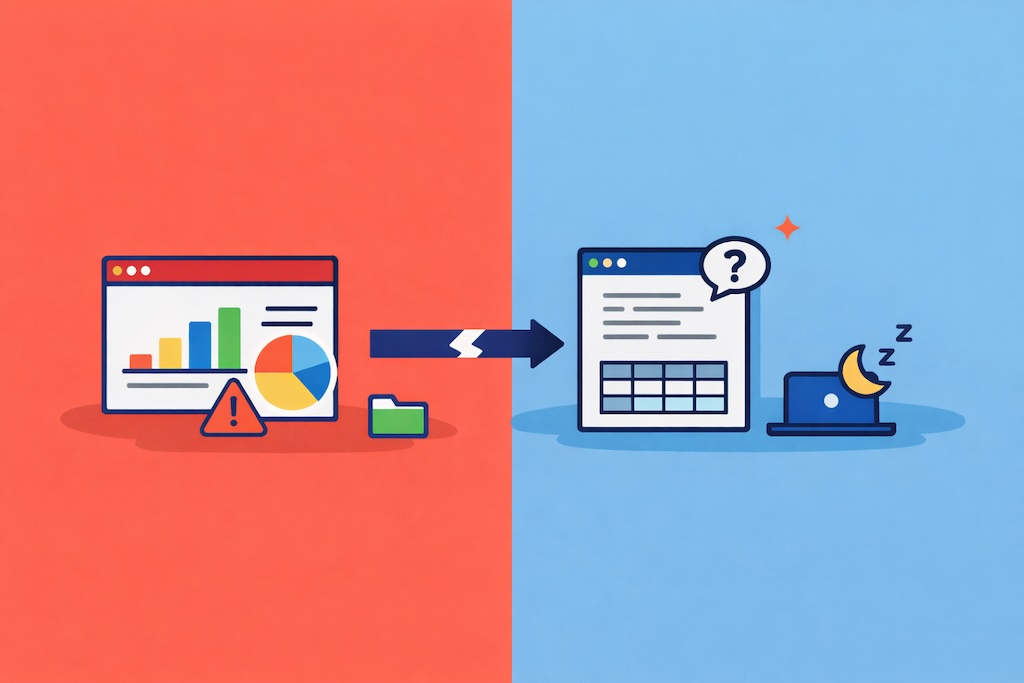
It's 4 PM Thursday. Your investor meeting is 9 AM tomorrow. The deck is done. You export to PDF and send it off.
Twenty minutes later: "The fonts look weird and half the charts are cut off."
You're spending your evening fixing a file conversion instead of sleeping before your biggest pitch.
This happens constantly and nobody talks about it. We obsess over tech stack and growth metrics. Meanwhile we lose hours every week to files that won't convert, formats that won't open, documents stuck in the wrong format at the wrong time.
It's Not About the Two Minutes
Converting a PowerPoint to PDF takes two minutes. Exporting a spreadsheet to CSV is quick.
But your sales rep does this five times daily because enterprise clients have specific format requirements. Your developer converts docs constantly because clients want PDFs but your team writes in Markdown. Your ops person spends half their morning wrangling data exports.
That's 20+ hours a week across a ten-person team. Half a person's job, except fragmented across everyone, pulling people out of flow state for technical busywork.
The worse cost isn't the time—it's momentum. You're building a feature, then you stop to figure out why a client's data won't import. You're prepping for a demo and the presentation breaks. These interruptions kill creative work.
And there's the embarrassment factor. You're on a video call with a prospect and can't open the file they just sent. Or you send a document that looks perfect on your screen but arrives corrupted. These moments make you look unprofessional even though the problem is purely technical.
Where This Hurts
Investor Communications
You build the deck in Google Slides for collaboration. Investors want PDFs. The export breaks animations, balloons to 47MB, or the formatting shifts. You end up with three versions and can't remember which one went to which VC.
Then there's the last-minute edits problem. An investor asks for updated financials an hour before the meeting. You update the spreadsheet, export to PDF, but now the charts don't match the deck. You're rebuilding slides when you should be rehearsing.
Data rooms are worse. Financials in Excel, legal docs in PDF, product specs in Word. Everything needs to be perfect because you're being evaluated on details. One investor's lawyer can't open your contracts because they're in the wrong PDF version. Another needs your cap table in a specific Excel format their software can parse. Managing formats while running your company is genuinely stressful.
Product Development
Your docs live in Markdown. Customer success needs PDFs for the help center. Sales wants Word docs for proposals. Someone maintains all these versions. They're always out of sync.
Two weeks later, a customer reports outdated information in the help center. Turns out the Markdown got updated but nobody regenerated the PDFs. Now you're auditing every document format to find what else is stale.
Design handoffs: Figma exports to SVG, then PNG for email, WebP for web. The developer is waiting. The deadline is tomorrow. Then the client asks for print materials and you need 300 DPI PDFs. The designer has to redo all the exports because the original specs were for web only.
Customer Onboarding
New customer needs to import existing data. They send a spreadsheet from 2007 that Excel flags as dangerous. Or everything is in PDF and needs structure. Or they exported from their old system in a format you've never seen.
You can't tell them "wrong file format." You figure it out. They wonder why your product is complicated, even though this has nothing to do with your product.
The worst is when they send data in multiple formats and you have to normalize everything before import. Three CSV files with different delimiters, two Excel workbooks with different date formats, and a PDF table that needs to become structured data. Your onboarding specialist spends three hours on data cleanup instead of actually onboarding the customer.
The Patchwork Problem
Most startups use whatever works in the moment. Five converter websites bookmarked, a couple desktop apps, tribal knowledge about which tool for which conversion.
You're uploading sensitive documents to random free sites. Quality degrades from different compression settings. Team members use different converters and get different results. Nothing automates. You do the same conversions manually repeatedly.
Last week someone used a free converter that added a watermark. The document went to a customer before anyone noticed. Now you're explaining why your "professional" company sent watermarked materials.
Plus the security concern about where files go and who accesses them. Your compliance checklist says no uploading customer data to third-party sites, but nobody has a better solution for converting that one weird format the enterprise client insists on using.
Making It Not a Thing
The fix isn't learning every file format or becoming a conversion expert. It's making file handling boring infrastructure that works in the background.
Email just works without thinking about it. When you can handle document conversions reliably in one place, the micro-frustrations disappear. Your team focuses on work instead of googling "convert xlsx to csv" for the hundredth time.
Fast startups aren't just great ideas. They eliminate small stuff that compounds into massive time sinks. File conversion is one of those things. Fix it once, and everything moves more smoothly.