
Best RPC Providers for Blockchain Development
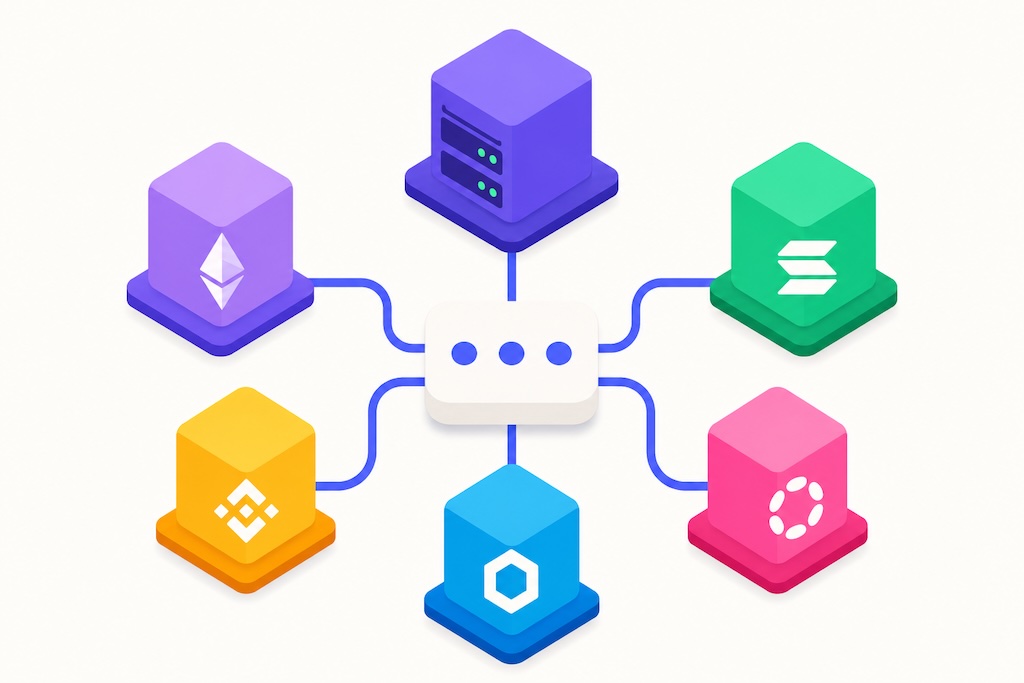
Every blockchain application depends on one thing before anything else: a reliable connection to the network. That connection runs through an RPC node provider — a service that handles the constant stream of read and write requests your app makes to nodes on the chain. Get it right and your infrastructure disappears into the background. Get it wrong and you're fielding user complaints about timeouts, stale data, and transactions that never landed.
The market for RPC providers has grown quickly, and so has the gap between what different services actually offer. Some are built for broad multi-chain coverage, others are optimized for one chain and go extremely deep, and others compete primarily on price transparency. Here are five worth serious consideration.
1. NOWNodes
NOWNodes is a good option on this list by network coverage, supporting over 120 blockchains through a single platform. The model is deliberately simple: you get a reliable, managed endpoint without having to think about infrastructure, node maintenance, or rate limit arithmetic. That breadth makes it useful for teams building on multiple chains simultaneously, or for projects that expect to expand beyond their initial network as the product grows.
The infrastructure story has grown more compelling recently. NOWNodes launched a new server cluster in the United States, completing a geo-balanced setup across North America and Europe. The practical effect on US traffic was significant — response times on most Ethereum methods dropped from the 300–800ms range down to under 80ms, with some methods hitting under 32ms. Automatic geo-failover is built into the routing layer, so a regional failure triggers a reroute without any manual intervention.
Reliability is backed by 2n+1 redundancy, multi-layer load balancing, and 24/7 node monitoring. The team pushes updates within hours of blockchain changes — a detail that matters on networks like Solana, where running a behind-version node doesn't degrade gradually; it just stops working. Clients include Trust Wallet, Exodus, Tangem, BitPanda, and CoinGate.
Key Features:
- 120+ blockchains supported on a single platform with no rate limits
- Geo-balanced infrastructure across North America and Europe with automatic failover
- 99.95% uptime backed by 2n+1 redundancy and multi-layer load balancing
- Sub-80ms response times on Ethereum endpoints for US-based traffic
- 24/7 node monitoring and blockchain updates pushed within hours of network changes
Why choose NOWNodes: It removes the operational complexity that would otherwise fall on your team — node maintenance, version tracking, failover configuration — across more than 120 networks at once. For teams that want to move fast without running infrastructure, that trade is worth making.
Ideal for: Wallets, DeFi interfaces, NFT platforms, multi-chain applications, and any project where uptime and operational simplicity are non-negotiable.
2. QuickNode
QuickNode has built its reputation on multi-chain flexibility and speed. It supports a wide range of networks including Ethereum, Solana, Bitcoin, Polygon, and dozens more, with a global node distribution that keeps latency competitive across regions. Endpoints can be shared or dedicated, and a marketplace of add-ons lets teams layer on NFT APIs, token data feeds, and other chain-specific tooling without switching providers.
The platform targets teams with real production traffic. Enterprise SLAs with 99.99% uptime guarantees, real-time WebSocket support, and 24/7 support lines give it credibility with development teams that can't afford ambiguity around reliability commitments. It's also one of the cleaner options for teams running both Ethereum and Solana workloads under a single account.
Key Features:
- Multi-chain support across Ethereum, Solana, Bitcoin, Polygon, and more
- Dedicated and shared endpoint options with global node distribution
- Add-on marketplace for NFT APIs, token data, and chain-specific tooling
- Real-time WebSocket support for subscriptions and event streaming
- Enterprise SLAs with 99.99% uptime guarantees and 24/7 support
Why choose QuickNode: If you're running a multi-chain application and want a single provider that covers your chains without cutting corners on any of them, QuickNode handles the breadth problem cleanly. The add-on marketplace also extends your capabilities without forcing you to wire up separate providers for individual data needs.
Ideal for: Multi-chain projects, trading bots, DeFi protocols spanning multiple networks, and teams that want production-grade infrastructure with formal uptime commitments.
3. Alchemy
Alchemy started as an Ethereum infrastructure play and has expanded into a full developer platform. The core RPC access is solid, but the real differentiator is what's built on top: enhanced APIs with indexed data, a mempool explorer, a request analytics dashboard, and webhook infrastructure for on-chain event notifications. Teams building complex Ethereum applications often find that Alchemy's tooling reduces the amount of custom backend work they'd otherwise have to build.
Its supernode architecture targets correctness and consistent routing under load, with 99.99% uptime targets and global distribution. The free tier is generous — 30 million compute units per month on Solana — making it a practical starting point before a project reaches the scale where paid tiers make sense. Solana support has matured, though Alchemy's depth on that chain still trails providers built specifically for it.
Key Features:
- Enhanced Ethereum APIs with indexed transaction and event data
- Request analytics dashboard for debugging and observability
- Webhook support for real-time on-chain event notifications
- Supernode architecture with 99.99% uptime targets and global distribution
- Free tier with 30 million compute units per month on Solana
- Mempool explorer for tracking unconfirmed transactions
Why choose Alchemy: The tooling is the pitch. If your team is building something complex on Ethereum and you want observability, analytics, and enhanced APIs built into your workflow from day one rather than bolted on later, Alchemy is structured around exactly that use case.
Ideal for: Ethereum-native dApps, developer teams that want analytics and debugging tools alongside RPC access, and projects that need transaction history and event tracking built into their infrastructure.
4. GetBlock
GetBlock approaches the regional performance problem differently from most providers: rather than trying to deliver uniform latency everywhere, it lets you choose which region your node runs in. That regional selectability — across New York, Frankfurt, Singapore, and other locations — translates into benchmark-leading performance in specific geographies. Independent tests have placed GetBlock as the good Solana RPC provider in Europe, Asia, and Africa, which is meaningful for teams whose users are concentrated outside North America.
Beyond the regional angle, GetBlock has built out two Solana-specific tools that address real production problems. StreamFirst is a low-latency data streaming layer. LandFirst focuses on transaction landing optimization — helping transactions get included during congested periods. Free Yellowstone gRPC is included on dedicated node plans, which is uncommon at GetBlock's price point. The company earned SOC 2 Type 1 attestation, providing a compliance baseline for enterprise teams.
Key Features:
- Region-selectable nodes across New York, Frankfurt, Singapore, and more
- Benchmark-leading Solana RPC performance in Europe, Asia, and Africa
- Ethereum and Solana support on mainnet and testnets via HTTP and WebSocket
- StreamFirst for low-latency Solana data streaming
- LandFirst for transaction landing optimization during network congestion
- Free Yellowstone gRPC on dedicated node plans
- SOC 2 Type 1 certification
Why choose GetBlock: Regional control is the main reason to reach for it. If your traffic is geographically concentrated outside North America and response time matters, GetBlock's benchmark performance in those markets is a real advantage over providers optimized for US-based latency.
Ideal for: Teams with European, Asian, or African user bases; projects that need Yellowstone gRPC without enterprise pricing; and teams with compliance requirements looking for a cost-efficient option.
5. Ankr
Ankr runs decentralized RPC networks in the space, with over 800 nodes spread across more than 80 chains and 70 geographic regions. The infrastructure is powered by independent node operators rather than centralized data centers, which gives it a different risk profile — no single vendor is a point of failure, and the architecture is structurally resistant to censorship. Ankr also holds SOC 2 Type 2 certification, which it earned in 2025, adding a compliance credential that decentralized providers rarely carry.
The pricing model is transparent. Premium access is billed at $0.10 per million API credits, with clear per-network multipliers that make cost forecasting straightforward: EVM chains over HTTPS run at 200,000 credits per 1,000 requests, Solana at 500,000, and beacon or advanced APIs at 700,000. Archive data is included on all tiers, and debug and trace namespaces are available on Premium. For high-volume read workloads where cost per request matters, Ankr is the most affordable option on this list.
Key Features:
- Decentralized network of 800+ nodes across 80+ chains and 70 regions
- 80+ blockchains supported including Ethereum and Solana
- Transparent API credit pricing: $0.10 per million credits, with published per-network multipliers
- Archive data included on all paid tiers
- Debug and trace namespaces available on Premium
- Up to 1,500 RPS on Premium plans
- SOC 2 Type 2 certified
Why choose Ankr: The decentralized architecture and the cost structure set it apart. For teams doing high-volume reads across multiple chains where predictable, low-cost billing matters, Ankr's pay-as-you-go model is hard to beat. The distributed infrastructure also appeals to projects that are philosophically opposed to centralizing their node dependency on a single vendor.
Ideal for: Cost-sensitive multi-chain teams, projects that prioritize decentralization and censorship resistance, and developers building or testing across a large number of chains simultaneously.
How to Choose
The right provider depends on what you're actually building. A few questions cut through most of the noise:
How many chains do you need? If you're building across five or ten networks today — or expect to — a provider with broad multi-chain coverage at consistent quality matters more than depth on any one chain. NOWNodes at 120+ chains and Ankr at 80+ chains lead here. QuickNode handles the major networks well without sacrificing on either Ethereum or Solana.
Where are your users? Latency is a geography problem as much as an infrastructure one. GetBlock's regional selectability and benchmark performance in Europe and Asia makes it the practical choice for teams outside North America. NOWNodes' geo-balanced US-Europe setup covers the two largest crypto-user geographies.
How much do you want to build vs. buy? Alchemy's enhanced APIs, analytics dashboard, and webhook infrastructure reduce how much backend work you need to build yourself — but only if you're on Ethereum. For simpler workloads, that tooling is more than you need.
What's your cost model? Ankr's pay-as-you-go pricing is the cheapest option for high-volume reads. NOWNodes removes rate limits and simplifies budgeting. GetBlock includes Yellowstone gRPC on dedicated plans that other providers charge separately for.
The good news is that none of these providers require long-term commitments to get started. Spend an hour testing latency from your primary user regions, run a few high-volume call patterns through the free tiers, and the performance differences will tell you more than any benchmark.