
AI Tarot Reading: How Artificial Intelligence is Changing Tarot in 2026
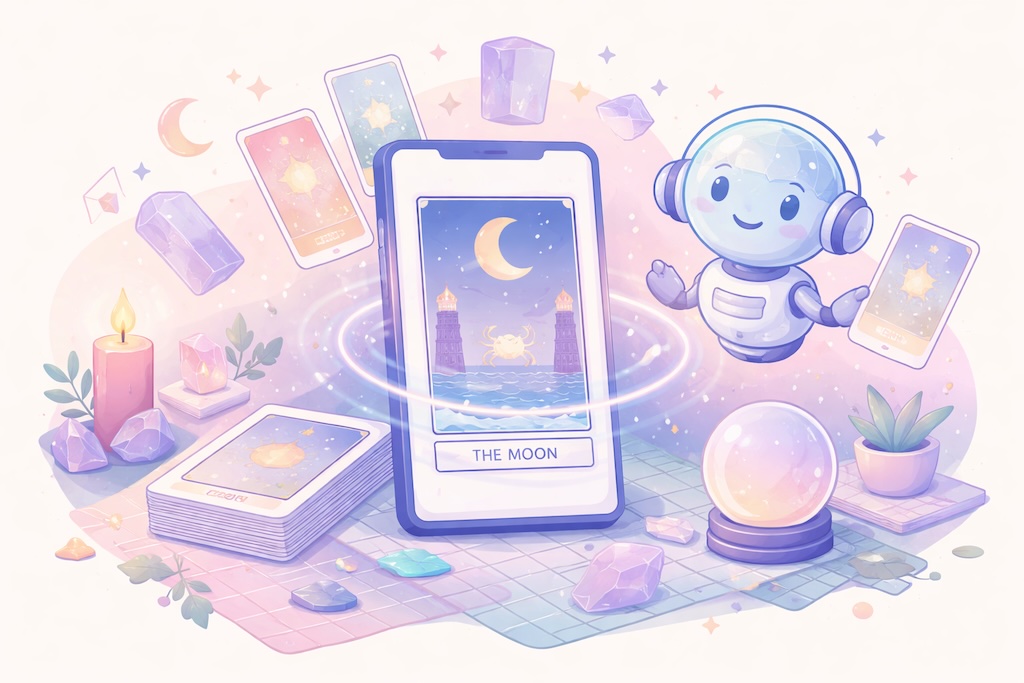
Tarot reading has always lived in that interesting space between intuition, symbolism, and personal reflection. For centuries, people have shuffled a deck, pulled a few cards, and tried to interpret what those images might say about their lives. But in 2026, something unexpected is happening: tarot is getting a digital companion.
Artificial intelligence is stepping into the world of tarot, offering readings that blend ancient symbolism with modern machine learning. For some folks, that sounds a little out there. For others, it simply feels like the next natural step for a practice that has always evolved with the times.
Whether you're a longtime tarot reader who keeps a worn Rider–Waite deck on your coffee table or someone who just pulls a daily card while sipping your morning latte, the rise of AI tarot is one of the most fascinating shifts happening in modern spirituality.
Let’s break down what’s really going on.
The Foundations of Tarot: A Language of Symbols
Before diving into AI, it helps to understand why tarot works the way it does in the first place.
A traditional tarot deck contains 78 cards, divided into two main groups: 22 Major Arcana cards and 56 Minor Arcana cards. The Major Arcana represent major life themes and archetypal experiences, while the Minor Arcana deal with everyday situations and emotional dynamics.
Cards like The Fool, The Lovers, The Hermit, and The Tower symbolize universal life journeys—new beginnings, relationships, introspection, and sudden transformation. Meanwhile, the Minor Arcana are organized into four suits: Cups, Pentacles, Swords, and Wands, each representing emotional, material, intellectual, and creative aspects of life.
Tarot readers don’t usually treat these cards as literal predictions. Instead, they interpret the patterns and symbolism in a spread to provide insight into someone’s situation.
Think of tarot as a symbolic storytelling system. The cards offer a narrative framework, and the reader interprets how those archetypes apply to real-life questions.
And interestingly enough, this interpretive nature is exactly why AI can work surprisingly well with tarot.
Why Tarot and AI Actually Fit Together
At first glance, tarot and artificial intelligence might seem like an odd pairing. One comes from mystical traditions and intuitive interpretation. The other is built on algorithms and data.
But if you look a little closer, the connection starts to make sense.
Tarot reading relies heavily on symbolic interpretation, pattern recognition, and narrative generation. Modern AI models—especially large language models—are extremely good at working with patterns in language and symbolic systems.
AI systems can analyze large collections of tarot meanings, historical interpretations, and archetypal symbolism. When someone draws cards digitally, the system uses that knowledge to generate interpretations that align with the cards and the question being asked.
In practical terms, AI tarot tools typically work like this:
- The user asks a question about love, career, or life direction.
- A digital tarot deck randomly selects cards.
- The AI analyzes the symbolism of those cards.
- The system generates a detailed interpretation based on the spread.
Because AI models are trained on massive amounts of text about mythology, psychology, storytelling, and symbolism, they can produce readings that feel surprisingly thoughtful and reflective.
What AI Tarot Actually Looks Like in Practice
In 2026, AI tarot platforms are becoming increasingly common. You’ll find them in web apps, mobile apps, and even integrated into chat-based AI assistants.
These tools allow users to draw tarot cards digitally and receive instant interpretations generated by artificial intelligence. Instead of flipping through a guidebook trying to decode the spread, the AI walks you through the symbolism and possible meanings.
One example of this new generation of tools is EsotericAI, a platform designed specifically for AI tarot reading. Instead of relying on a traditional tarot reader, the system uses artificial intelligence to interpret tarot spreads and provide personalized guidance based on the symbolism of the cards and the user’s question.
In many ways, it feels like having a tarot reader available whenever you need one—whether that’s during a quiet Sunday afternoon or at 2 a.m. when you’re overthinking a life decision.
Why People Are Turning to AI Tarot
You might wonder why someone would use an AI tarot tool instead of going to a human reader.
Turns out, there are a few practical reasons.
Accessibility
Traditional tarot readings often require scheduling an appointment or visiting a reader in person. AI tarot tools remove that barrier entirely.
Anyone can pull a spread instantly from their phone or laptop.
A Learning Tool for Beginners
If you’re new to tarot, remembering the meanings of all 78 cards can feel overwhelming.
AI tools help beginners understand how different cards interact within a spread. Over time, users start recognizing patterns and symbolism themselves.
Private Reflection
Let’s be honest—some tarot questions are deeply personal.
People sometimes want to explore questions about relationships, identity, or life direction without sharing those thoughts with another person. AI tarot offers a private space for self-reflection.
And for a lot of folks, that’s incredibly valuable.
The Debate: Can AI Replace Human Tarot Readers?
Not everyone in the tarot community is fully on board with AI readings.
Some readers see AI tools as fascinating innovations. Others worry that they might remove the intuitive and spiritual aspects of tarot.
A human tarot reader can observe body language, emotional tone, and subtle cues during a session. They may also draw from years of intuitive experience when interpreting a spread.
AI doesn’t have that kind of human intuition.
But many modern tarot practitioners are starting to view AI as a supporting tool rather than a replacement.
Some readers even experiment with AI interpretations to explore alternative perspectives on a spread. In that sense, AI becomes a creative companion rather than a competitor.
Tarot, after all, has always been about interpretation. The more perspectives you have, the richer the conversation becomes.
AI Tarot as a Tool for Self-Discovery
One of the biggest misconceptions about tarot is that it’s purely about predicting the future.
In reality, most tarot readings are about self-awareness and reflection.
Pulling a card like The Hermit might encourage someone to step back and spend time in introspection. Drawing The Tower might suggest a need for major change or letting go of outdated beliefs.
AI tarot tools help users interpret these symbolic messages quickly and clearly.
Many people now use tarot in a similar way to journaling or meditation—drawing a card each morning and reflecting on its meaning throughout the day.
In that sense, AI tarot isn’t really replacing traditional tarot. It’s simply making the practice more accessible and integrated into daily life.
What the Future of AI Tarot Might Look Like
The technology behind AI tarot is evolving quickly, and the next few years could bring some interesting developments.
Personalized Spiritual AI
Future systems may learn from a user’s previous readings and recognize recurring themes in their life. That could lead to more personalized interpretations.
Visual Tarot Recognition
Some emerging tools allow users to photograph their physical tarot spreads and have AI interpret the cards directly. This blends traditional decks with digital analysis.
AI Tarot Teachers
Another possibility is AI-powered tarot tutors that help students learn card meanings, symbolism, and advanced spreads.
For beginners, this could dramatically reduce the learning curve.
The Big Picture
Tarot has never been static. It has evolved for centuries alongside culture and technology.
The earliest tarot decks appeared in Europe during the 15th century and were originally used as playing cards before eventually becoming tools for spiritual reflection and psychological insight.
Over time, tarot absorbed influences from mysticism, psychology, and modern spirituality.
Now, in 2026, it’s absorbing artificial intelligence.
And honestly, that evolution feels pretty natural.
At its core, tarot is about interpreting symbols, stories, and archetypes in our lives. AI just happens to be exceptionally good at analyzing patterns and generating narratives.
So when you combine the two, you get something entirely new—a digital interpretation of an ancient system.
Will AI replace human tarot readers?
Probably not.
But it is expanding how tarot is practiced, learned, and experienced in the modern world.
And who knows—your next tarot reading might come from a deck of cards, a seasoned reader… or an algorithm quietly interpreting the symbols behind the scenes.