
AI Personalization That Won’t Trigger Spam Filters
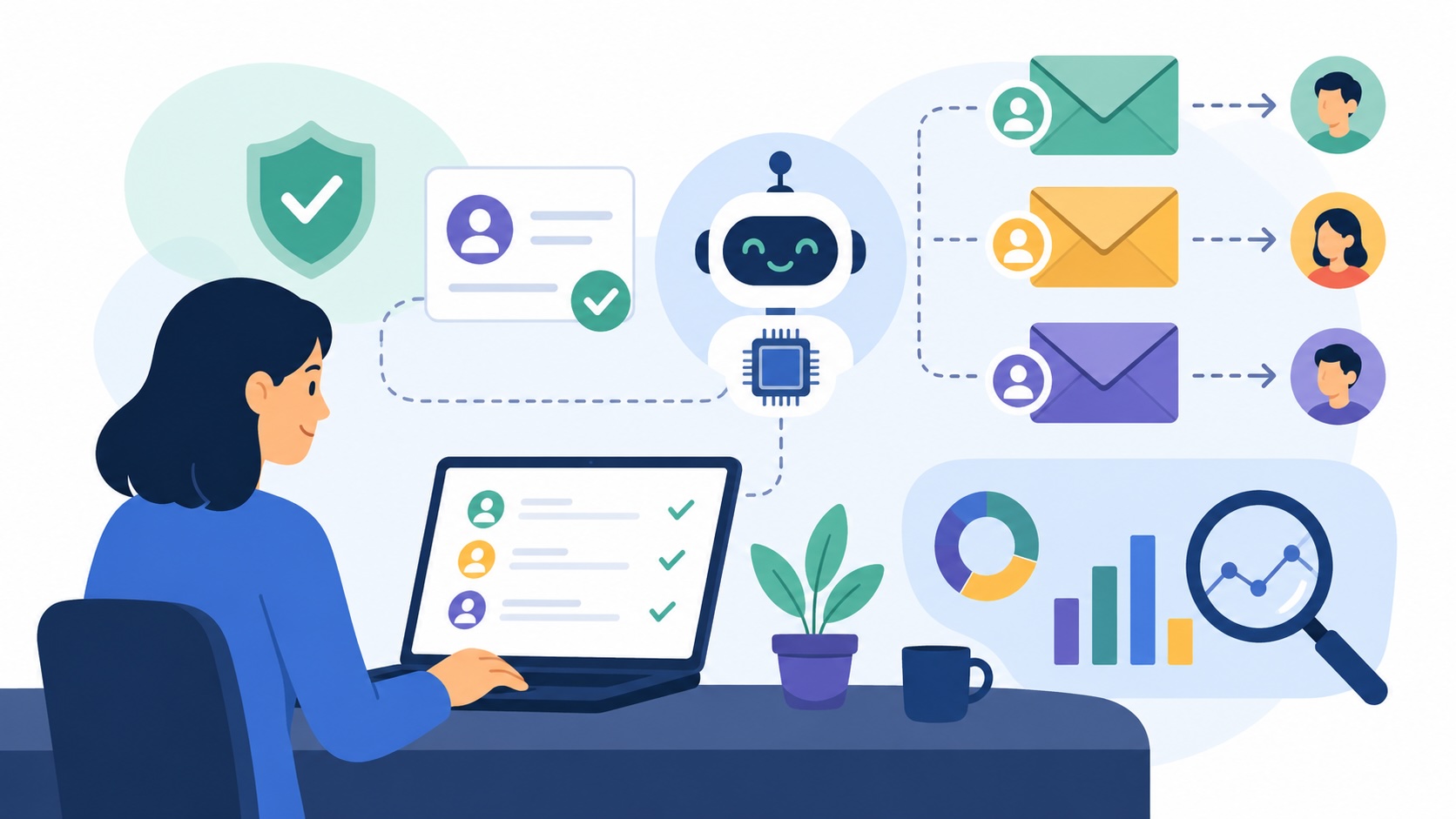
Artificial intelligence has given cold outreach a massive facelift. Marketers can now personalize thousands of emails in just a few minutes, which used to take hours. The potential is clear: the ability to scale communications without losing critical human feel.
But it comes with a catch. Spam filters have also grown more advanced. The filters are scanning for non-compliance, suspicious content, and low-quality data. Your AI workflows need to be well-managed, or they risk being flagged as lookalike content.
The biggest challenge for marketers is balancing automation with restraint. While AI is wildly powerful, it still needs rules, oversight, and guardrails. In this post, we’ll discuss how to keep your marketing emails compliant, clean, and, therefore, effective. This way, personalization will help support your inbox landings instead of stopping them.
Sender Compliance First and Foremost
No amount of personalization can save your emails if they break the law, and most regions have their own version. Regulations such as GDPR in Europe, CAN-SPAM in the United States, and CASL in Canada set the baseline.
You’ll need to ensure each email includes at least the bare minimum. For example, accurate sender details, a working unsubscribe option, and a subject line that matches the content. Emails missing any of these elements can be penalized and will likely trip spam filters instantly.
Compliance also hinges on trust. Your recipients expect transparency, and if they see misleading subject lines or no unsubscribe option, they’ll complain. Each complaint is factored into the spam algorithm, lowering deliverability for future campaigns.
Always audit your templates before scaling with AI. Even if the personalization is flawless, a single compliance failure can undo the effort. In other words, sender credibility matters way more than clever headlines and copy.
Quality Over Quantity
Top-tier personalization starts with high-quality lists. Purchased or scraped lists are typically outdated or loaded with invalid addresses, which causes bounces. Too many bounces alert spam filters that you might be a careless or even malicious sender.
Keeping your data clean safeguards your reputation. And verification tools should always be used whenever a campaign is ready to go live. List segmentation is also incredibly important. Dividing up your list by engagement level, like active and occasional readers, helps create more precise targeting.
When you get bounces or contacts that go dormant for too long, scrub them. Keeping old information on your list only dilutes your engagement metrics, and in the long term, it can turn spam defenses against you. Smaller, more engaged lists consistently outperform massive lists choked with old data.
The point is, AI amplifies everything you give it. When you magnify “garbage in, garbage out,” you dramatically boost the odds of bad results and spam complaints. Feeding it clean, segmented lists can cultivate more effective personalization efforts. These efforts lead to more inbox hits.
Safe Prompts and Merge Fields
You know that AI is only as good as the prompts it receives. The output can feel forced or even creepy when you give it instructions for hyper-specific details. It goes along with the general concept of “just because you have someone’s data, doesn’t mean using it isn’t weird”.
When you send communications, don’t have the AI reference things that are too personal. Even if information is scraped from social media, leave out things like hobbies, locations, family, etc. Stick to things that can be used professionally, like industry news relevant to their field or job title.
Content Variability Without Spammy Tricks
The goal is authenticity, not gimmicks. AI helps here by creating natural variation at scale. Marketers can rotate subject lines, reorder paragraphs, and swap in alternative phrasing while keeping the message clear. Overloading subject lines with emojis, excessive punctuation, or random synonyms only looks artificial and erodes trust.
AI should be instructed to generate clean variations of key ideas, and body content can follow a similar model. Varying calls-to-action or highlighting different pain points gives campaigns freshness without losing focus. Content diversity reduces filter triggers and makes messages feel more human, supporting deliverability and engagement.
Monitoring and Remediation
Even the best, most meticulously designed campaigns can end up in the spam folder if deliverability isn't monitored. According to Kaspersky's 2025 email threat analysis, 44.99% of global email traffic was classified as spam. With inboxes increasingly crowded by unwanted and malicious messages, keeping an eye on deliverability metrics is essential to ensure your emails reach their intended audience
Complaint rates are another critical component. Rising numbers of clicks to “report spam” should have you stop the presses to see what’s causing your base to do that. Open rates and click rates matter, sure, but those only matter once you’re in the inbox and people pay attention.
Remediation is about quick correction. Stop the campaign, audit lists, review prompts, and clean merge fields. Remove inactive or unverified contacts before restarting. If issues persist, adjust sending domains or IPs to reset reputation. AI can ramp up your speed, but you still need substantial amounts of real, human oversight.
For teams running outreach platforms in-house, infrastructure visibility is just as important as email analytics. Monitoring resource usage, storage performance, and virtualized workloads helps prevent unexpected downtime during large campaigns. Many SaaS companies rely on a Proxmox server setup to consolidate applications, manage virtual machines efficiently, and maintain operational stability as marketing automation scales.
Privacy and Security Considerations
Personalization at scale means handling prospect data carefully. Any information fed into AI prompts must be limited to what is public, professional, and relevant. Sensitive details such as personal email addresses or private identifiers should never enter prompt workflows. Strong account security also protects marketing systems. Use multi-factor authentication and secure passwords for sending platforms. A stronger option is to create long passphrases.
Browsing and research also introduce risks. VPNs help marketers work safely across networks. If you’re interested in using a VPN during marketing work, take a look at VPN solutions designed for secure and efficient online operations.. It can give you a great idea on how to cut the exposure area for malicious sites, trackers, and hackers. Security and privacy practices should be built into every campaign, not added as an afterthought.
Smarter AI and Cleaner Inboxes
AI can be a powerful sidekick for cold outreach, but you need to use it wisely. You can’t just let it run wild with your email lists, or you’ll find your sender trust score bottoms out. Long-term deliverability depends far less on flashy personalization and more on compliance and monitoring. When it’s used thoughtfully, though, it can boost outreach at scale with little effort. As a result, you can send more cold emails that reach their destination and work to start conversations.