
AI in the Automotive Sector: Real-World Use Cases of AI Automotive Software Development
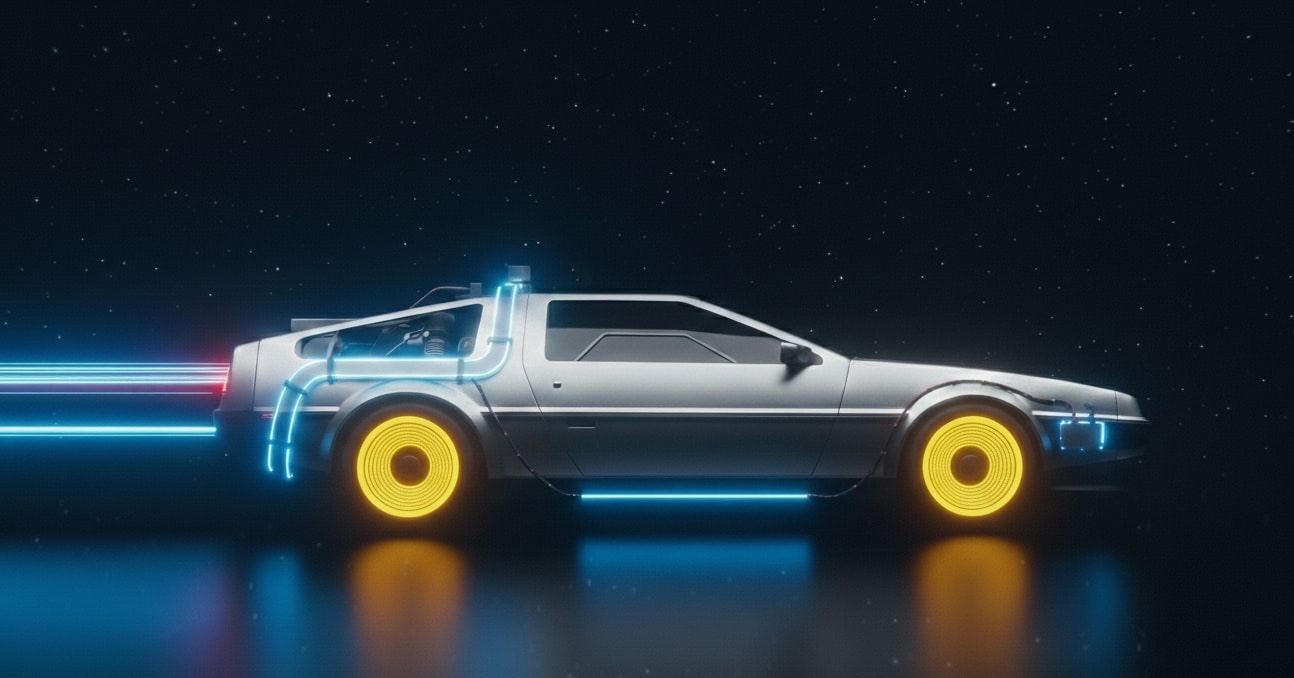
The automotive industry is changing, evolving, and transforming constantly. The latest significant catalyst has been artificial intelligence (AI). What science fiction writers once described is now driving on the streets as standard production vehicles.
BMW i7 with its driver assistance system that handles parking and traffic navigation, plus integrates a voice assistant. The Audi e-tron GT, which uses AI for thermal management of components, and the Hyundai IONIQ 5 with its intelligent lighting system and route planning... the list goes on endlessly. All of them demonstrate how amazing the combination of power, comfort, and intelligent interaction has become.
We already have these impressive achievements that have become reality. However, humanity has no intention of stopping. We strive for even greater safety, greater efficiency, and maximum personalization.
In this article, we’ll dive into real-world examples of how AI is being used in automotive software development today and explore the exciting possibilities that lie ahead. Buckle up, let’s hit the road!
Data Analytics and Connected Vehicles: How AI is Changing Manufacturing
Connected mobility is an ecosystem where cars, roads, traffic lights, and drivers' smartphones "communicate" with each other. Companies like DXC Technology are working on AI automotive software development, creating platforms to analyze enormous volumes of data from connected cars.
Of course, in the world of Cyberpunk 2077, cars are fully autonomous and connected in a single hyper-intelligent network. Our real-world technologies are more down-to-earth and haven’t reached that level yet, but we are making progress. Connected vehicles can already warn each other about road hazards, such as icy conditions or accidents ahead.
Another example is the parking solution from DXC and PKO Bank Polski, where drivers can pay for parking directly through the car's infotainment system, which is connected to mobile banking. This is one of the first such solutions, demonstrating how AI is integrating into the everyday driving experience. And most importantly, it improves it!
Transformation of the automotive industry
Leading solutions encompass autonomous driving, connected mobility, digital cockpits, and intelligent user experience.
Particularly promising are connected vehicle analytics solutions that integrate data from various sources to detect software-defined vehicle anomalies, analyze product quality, and optimize warranty service operations. AI-based innovative platforms enable automakers to unite internal and external data, monetize information flows, and make proactive decisions.
Integration with urban infrastructure opens new possibilities: from seamless parking payment through vehicle infotainment systems to fleet management. Such solutions transform manufacturers into technology companies capable of creating ecosystems of sustainable, shared, and intelligent mobility of the future. Let's look at each trend separately.
Voice Assistants: When Your Car Understands You Better Than Your Friends
Remember Christine from Stephen King, the car with its own will? Modern AI assistants aren't quite that independent yet, and certainly not that menacing, but they're no less impressive. Mercedes-Benz has integrated ChatGPT into its MBUX system, creating an assistant you can talk to like a real person. The system understands conversation context, jokes, and answers complex questions through Azure OpenAI Service and Bing search capabilities. Who needs friends when you have a car like that? :)
Tesla added Grok AI to its vehicles—an assistant from xAI now available to owners in the US. Now you can ask "Grok, is this true?" not only in Twitter threads but also in your car. Interestingly, for the Chinese market, Tesla is partnering with ByteDance, integrating Doubao and DeepSeek models into the Model Y. This solution addresses Tesla's weak point compared to Chinese competitors who have long offered advanced voice systems.
BMW introduced Operating System X with full voice control support. For the Chinese market, the company developed BMW iDrive X AI together with Alibaba (yes, Alibaba! not just phone cases, as they say!), to meet the expectations of local drivers. The system understands natural language and controls virtually functions from climate control to navigation.
Autonomous Driving: From Science Fiction to Reality
Mercedes-Benz Drive Pilot already allows drivers to take their hands off the wheel at speeds up to 60 km/h on German autobahns during traffic jams (Level 3 autonomy).
Tesla Autopilot and Full Self-Driving (FSD) are constantly being improved through machine learning. Every Tesla collects traffic data, which is then used to refine the algorithms. FSD version 12 utilizes end-to-end neural networks that are trained on millions of miles of driving data from real drivers.
BMW is working on Level 3 and Level 4 systems for the Neue Klasse, which are planned for release in the coming years. The company has managed to reduce development time thanks to AI simulations that replace thousands of hours of real-world testing.
Level 4 autonomy, where the car handles virtually all conditions without driver intervention, is already being tested in commercial taxi services like Waymo and Cruise in select US cities. We'll talk a bit more about the levels of autonomy later.
Predictive Diagnostics: Your Car Knows When It Needs a Doctor
At BMW Group's production facility in Regensburg, the AI conveyor equipment monitoring system prevents failures, saving over 500 minutes of production time annually. This is an integrated learning system that detects potential malfunctions before they occur.
Tesla monitors battery health, engine performance, and braking systems through cloud technologies. The car sends notifications to the owner when maintenance is needed. This isn't a "Black Mirror" plot yet, so it can't schedule itself at a service center... or can it? It can! Some models indeed can automatically schedule service appointments. Such proactive diagnostics increase reliability and customer satisfaction. But this isn't yet mass-market.
For owners, this means fewer surprises on the road and money savings. Instead of replacing a broken part at great expense, you replace it in advance at a better price. According to research, AI diagnostics reduces resource consumption for component replacement and decreases vehicle downtime.
How to Understand Vehicle Autonomy Levels?
Autonomy levels have been mentioned several times here. But what does this mean? Can a car independently take you on vacation while you sleep? The answer lies in the international system developed by the Society of Automotive Engineers (SAE International). They divided autonomy into 5 levels, from zero (when you do everything) to five (when the car does everything). Let's skip level zero and break down the remaining 5.
Level 1: Driver Assistance (Hands-on)
This is basic driver support. The car assists with only one function at a time. In almost every modern car, from budget to premium models.
Example: Adaptive Cruise Control (ACC), which automatically maintains distance from the car ahead, or Lane Keeping Assist (LKA), which gently steers if you drift.
Level 2: Partial Automation (Hands-off)
The car becomes more independent, but the driver is still the primary pilot. Example: Tesla Autopilot, Nissan ProPILOT. The system can simultaneously control speed and lane positioning. Important: You can take your hands off the wheel briefly, but your eyes must stay on the road. If the system encounters a complex situation, it will immediately ask you to take over.
Level 3: Conditional Automation (Eyes-off)
The first level where the driver can look away from the road under certain conditions.
Example: Mercedes-Benz Drive Pilot.
Limitation: Works only on specially equipped roads and at low speeds. The system alerts you when conditions become more challenging, giving a few seconds to retake control.
Level 4: High Automation (Mind-off)
Almost a fully autonomous “driverless taxi,” but with geographic limitations.
Example: Waymo or Cruise robotaxi services in the U.S. The car can drive itself without driver intervention, even if the system fails.
Limitation: Only within a defined “Operational Design Domain” (ODD).
Level 5: Full Automation (Wheel-optional)
Ultimate autonomy. The car can drive anywhere, in any conditions, without a driver — even without a steering wheel or pedals.
Status: Still in development and testing.
Your car is probably no higher than Level 2. But perhaps soon you'll be able to replace it with something more automated.
FAQ
Is it really possible to find a company that works with AI for cars?
Yes, for example, DXC Technology offers AI solutions for vehicles, including autonomous driving and predictive maintenance.
What services do Automotive Software Development companies offer?
Software development for autonomous driving, ADAS, AI analytics, energy consumption optimization, driver experience personalization, and IoT integration.
What is the cost of such services?
Prices vary from small projects to complex systems for large automakers – ranging from thousands to millions of dollars.
In which countries has Level 5 autonomy already been introduced?
Fully autonomous Level 5 vehicles are currently only available in pilot projects in the USA, Germany, and China.
AI Automotive Software Development: The Future is Here
Artificial intelligence is changing the automotive industry as radically as the internal combustion engine once did. According to analyst estimates, the share of software in vehicle cost continues to grow, especially with increasing levels of autonomy. In 10 years, Level 3 vehicles will become commonplace on roads, and Level 4 and Level 5 technologies will begin mass implementation.
Vehicles are transforming into intelligent partners that make our lives safer, more comfortable, and more interesting. And this is just the beginning of the transformation that artificial intelligence will bring to the world of automobiles.