
AI Governance in 2026: Balancing Peak Workflow Speed with Data Compliance Standards
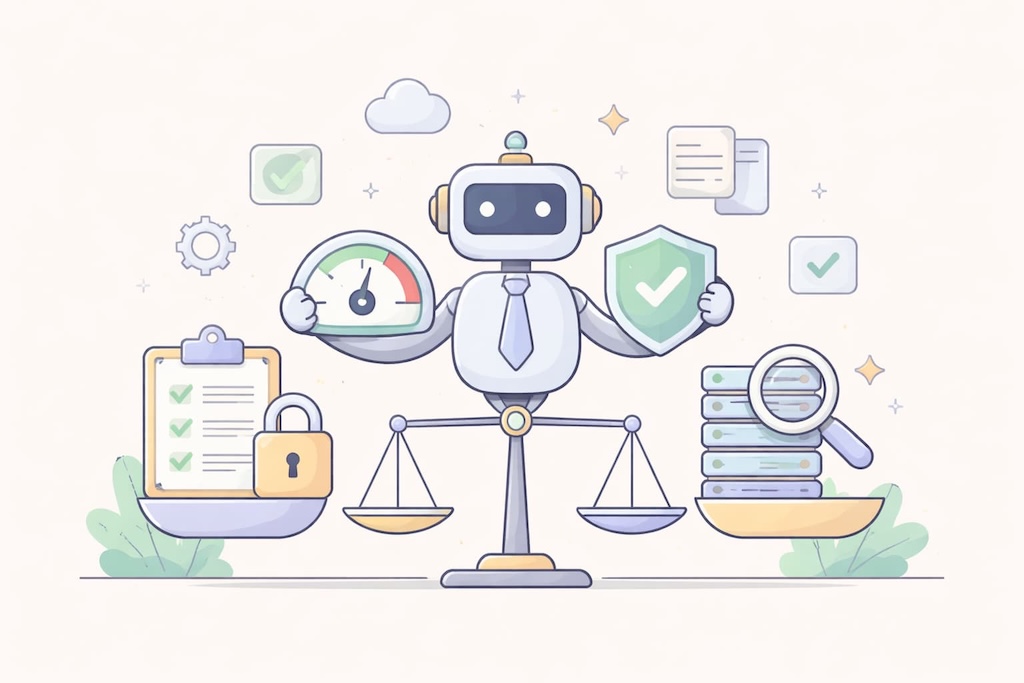
The intelligence-driven market has reached a critical point of inflexion, where the pace of operations must coexist with strict regulatory control. By 2026, AI governance will be viewed not as a burden on bureaucracy, but as an operational model that will enable startups and businesses to deploy autonomous agents without reservation. Using effective guardrails, companies may avoid the errors caused by hallucinations and data leaks, which may result in huge legal fines.
The aim of the contemporary founders is to make things smooth so that innovation can prevail in a well-established digital environment. The strategic oversight guarantees that all automated decisions are traceable, ethical, and comprehensive in accordance with the global privacy requirements.
Integration of Automated Policy Enforcement
Some of the current governance frameworks employ Policy-as-Code to make sure that each machine learning interaction satisfies safety conditions before being executed. With these rules directly embedded in your delivery pipelines, you are able to optimize your workflow without having those little updates manually signed off on.
Real-time High-risk models can be paused by automated triggers that identify bias or data drift, safeguarding the brand. This is a proactive entry strategy that minimises the compliance drag that usually delays engineering teams when launching a product.
How Does Explainable AI (XAI) Build Consumer Trust?
Black-box models are also being rejected by regulators who insist on transparency in automated decision-making processes.
- The application of XAI enables teams to produce so-called Model Cards explaining why an AI made a certain conclusion.
- This openness is crucial to the industry, such as fintech or healthcare, in which a wrong prediction can change a life.
- The availability of clear audit trails will present the evidence required in government investigations, and this will be of great help in avoiding fines due to non-compliance.
Implementing Real-Time Data Lineage Audits
Knowledge of the source and flow of training data is the key to passing contemporary privacy audits. The neural networks require that organizations have an elaborate map of the way information is gathered, processed, and ultimately used by the organization.
Constant surveillance solutions are currently offering real-time dashboards that visualize data provenance, so that there is no introduction of any poisoned or unintended datasets in the system. Such a fine-tuning of the granular control avoids making the legal Right to be Forgotten a technical nightmare for the database administrators.
What Are the Benefits of a Cross-Functional AI Council?
The establishment of a special council is an effort to combine lawyers, technical professionals, and ethical professionals to provide an early review of high-impact AI undertakings.
- This participatory technique is used to find possible regulatory bottlenecks, such as regulations, before much capital is put into a faulty project.
- Various viewpoints contribute to the reduction of minor biases that an entirely technical team can miss in the testing stage.
- Consistent meetings of the council make sure that the ethical charter of the organization is relevant at the time of changes in the international laws of AI.
Scaling Autonomous Agents with Risk-Based Tiering
Not all AI applications need the same level of scrutiny, and the benchmarks of 2026 focus on risk-based tiering to optimize efficiency. The lower-risk applications, like internal document summarizers, can be brought along the fast tracks with little supervision.
On the other hand, systems that can provide biometric information or hiring algorithms are high-risk and are thoroughly tested in the Human-in-the-Loop. Such a discriminating strategy does not allow the governance department to become a bottleneck on the beneficent innovations.
How Does Real-Time Drift Monitoring Sustain Performance?
AI models are vulnerable to concept drift, in which the models lose their accuracy when the real-world data starts to vary.
- The automation of monitoring platforms notifies engineers when the performance of a model drops to a quality level that is below an established quality parameter.
- This is because of the continuous monitoring that ensures that the automated systems do not make stale or wrong decisions that may also be annoying to customers.
- Planned retraining cycles keep the AI an efficient and helpful tool to the business.
Centralizing Documentation for Regulatory Readiness
Having one source of truth for all the documentation relating to AI is the only way to survive the stringent audits of 2026. All versions of a model, its training parameters, and which tests it passed are supposed to be stored in this central repository.
These facts can easily be available, and therefore, legal teams can act on regulatory questions within hours, not weeks. These reports are now generated on digital platforms, and all the transformation by the development team is tracked.
Training Workforce for AI Ethical Literacy
The last layer of good governance is a wise workforce that is aware of the ethical implications of the tools they use daily. The workers should be educated to identify AI-based fake news and report when there is something wrong with the automated work process.
Ethical literacy will enable the staff to become the front line of defense against an algorithmic bias or security vulnerability. Workshops will regularly make the human element an active force in the governance process.
The AI Governance Impact Matrix
| Governance Element | Impact on Speed | Security Benefit |
|---|---|---|
| Policy-as-Code | High (Automation) | Prevents unauthorized deployments |
| Risk-Based Tiering | High (Prioritization) | Focuses oversight on critical areas |
| Real-Time Monitoring | Moderate | Detects performance drift instantly |
| Explainable AI (XAI) | Low (Requires processing) | Essential for regulatory defense |
Strategic Operational Success
To attain business expansion in the intelligence-based market, a balance must be maintained between aggressive innovation and defensive compliance. Those companies that can effectively Optimize your workflow with automated governance will be ahead of those companies that view regulation as something that should be considered as an afterthought. Combining all these eight pillars, you would have turned your compliance department into a competitive advantage instead of a cost center.