
4 Environmental Data Layers That Validate Your Startup's Product-Market Fit
Many in the startup ecosystem talk a lot about 'Product-Market Fit' (PMF). We obsess over user interviews, click-through rates, and churn.
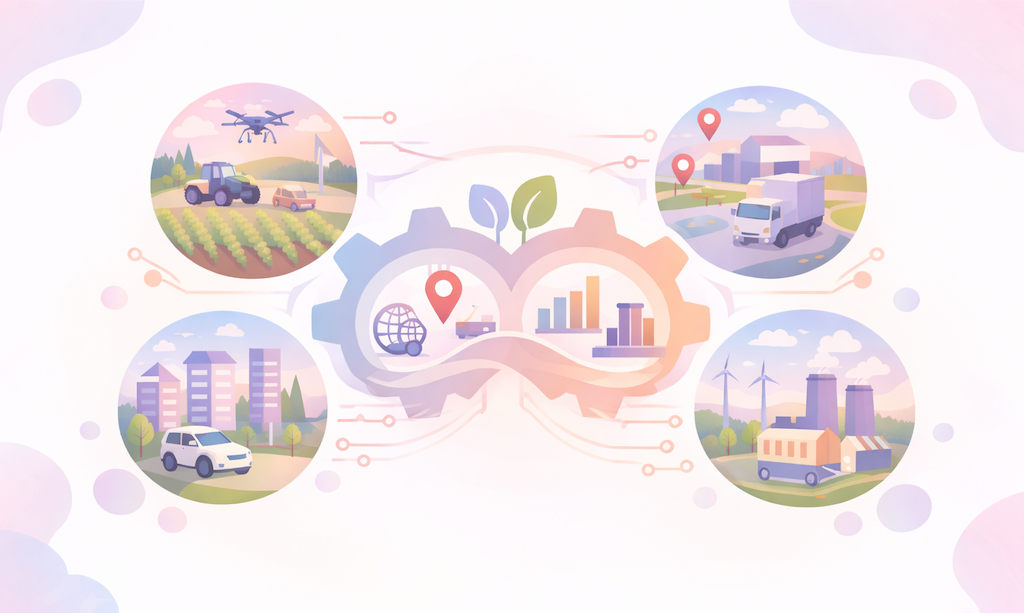
Yet, for a huge group of startups, AgTech, LogiTech, PropTech, and even On-Demand delivery, the market doesn't even constitute a collection of individuals but rather the physical world they occupy.
So basically, if you're selling products based on how people act, how things move, how energy is used – things like that – you'll constantly have to change what you're selling because you can't force the world not to change constantly.
By building environmental data into your pitch, you can progress from speculative growth up to undeniable verification.
Let's look at four data layers you can build that will help you prove your startup is built for the real world.
The Correlation of Consumption Patterns
Consumer behavior is rarely random. At times, it's sort of a reactive dance with the local climate.
When you're at the very beginning of validating your product, you want to know whether people are buying your solution as a result of your marketing or due to the weather that created a crunch.
If you're developing a new SaaS tool for home services, for instance, you can leverage historical climate data to show a direct link between temperature spikes and service requests.
If an investor sees a graph where your product's demand is in line with environmental stress, it indicates your market is 'baked in' to the geography.
It transforms a 'lucky' sales month into a predictable, repeatable revenue stream.
Logistics Risk and Resilience Metrics
For startups that move anything from point A to point B, you need 'the elements' as your largest overhead. Investors are ever more leery of 'fair-weather' startups that can fail when the first storm comes down.
They want to be aware that your business model is solid and can withstand the storms.
This is where your secret weapon lies in technical validation. What you can do here is leverage a global weather information API, and have your app use this accurate data to calculate real-world conditions and predictions to reduce risk.
You can see this clearly when you’re comparing expansion markets:
Let’s imagine you’re designing an autonomous drone delivery service. What you can do here is you can utilize worldwide data to compare the potential expansion cities.
Think about launching into a stable climate like Phoenix versus a volatile one like Miami.
Perhaps in Miami, your Product-Market Fit (PMF) is higher than you'll be used to, precisely because the pain point, delivery delays tied to tropical storms, for instance, is more difficult to take. If you explain why one city mattered more than another, using global weather layers, then you prove your expansion strategy draws on the 'risk-adjusted' market.
It demonstrates that you aren't just choosing cities based on population, but on the areas where your solution delivers the most relief.
What all of this shows to investors is that growth of a business is being driven not by optimism/assumption, but rather by measurable risk.
Real-World Energy Savings
To prove your startup's 'green', you need hard numbers that can be 'weather-normalized'. If your startup saves commercial buildings a few more bucks in heating, then on a mild winter day, you will save 10%.
But if your software can be shown saving 10% in Chicago's coldest week in the city's last decade, it's your "Why Now".So, using historical environmental data allows you to strip the luck of a warm season out of the equation and demonstrate the sheer power of your tech.
This data layer confirms that your product succeeds when the world is at its worst – which is when your customers will be most interested in paying for it.
Hyper-Local Market Timing
Market Timing is widely referred to as the No. 1 reason startups are successful or unsuccessful.
For many people (and businesses), timing is literal. If you're introducing a product that provides an out.
door solution to a problem, that could be a new durable construction material or an outdoor event-planning app, your PMF has a lock on the local 'operating window.'
You can use environmental data to show that your target market has a long enough season to support the business, or use it to demonstrate that the 'pain' of a short, intense season (like a 100-day period of extreme heat) produces a desperate, high-intent customer base.
If you can tell an investor, 'We are launching in Texas because the 10-year heat index indicates a 20% growth rate in the 'cooling-solution' market,' you're talking that language for someone who's done their homework.
Conclusion
We live in a world where every second of ad spend and each hour of development is valued.
Founders who decide to use data to bridge the digital and physical divide gain a giant competitive edge. It takes your startup out of 'software' and into 'infrastructure.' When you get the world to see your startup, don't just show them your code. Tell them how your code interacts with human reality in the environment.
Environmental data layers are NOT just forecasting a trend; they're proving the necessity. And regardless of whether it's in the eyes of a partner, an investor, or your first ever customer, this change from 'optional' to basically 'mandatory' is the ultimate achievement.